
India's $25 Billion Missed Opportunity in Global Fashion & Its Redemption
How India went from the fashion nerve center to the fringes and what structural reforms can bring it back.
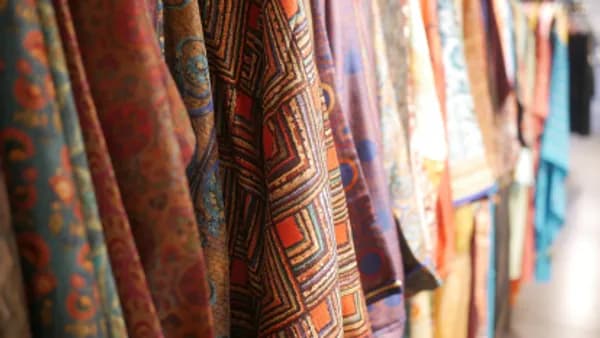
India produces 25% of the world's cotton and employs 45 million people in textiles. We're the world's 6th largest exporter of apparel, shipping $15.5 billion worth of garments annually.
Yet our exports are 90% OEM/ODM—nameless manufacturing for foreign labels. China, starting from scratch in the 1980s, now exports $178 billion in apparel. Italy, with 1/30th our workforce, exports $30 billion. The difference? They export brands and systems, not just garments. We invented the textile trade. Somewhere along the way, we forgot how to own it.
We've Done This Before
Between 1600-1800 AD, Indian textiles were the world's most coveted luxury good. Dhaka muslin was so fine that 15 meters could pass through a wedding ring. Kashmiri pashmina commanded prices equivalent to gold by weight. European royalty paid premiums for Chanderi, Banarasi, and Kanjeevaram.
India controlled 25% of global GDP in 1700, largely on the back of textile exports. The British East India Company didn't colonize India for spices—they came for the fabric. The Industrial Revolution in Manchester was Britain's response to India's textile dominance. We weren't just manufacturers. We were the global brand. Then colonization dismantled the guilds, deskilled artisans, flooded our markets with machine-made British cloth, and reduced us from exporters to raw material suppliers. By 1947, India's share of global GDP had collapsed to 4%. The infrastructure survived. The knowledge survived. But the integration was destroyed.
The Fragmentation Tax
The Indian textile ecosystem today is split across three non-communicating layers:
Manufacturing: 65,000+ registered textile units, mostly in Tamil Nadu, Gujarat, and West Bengal. Peak capacity, minimal branding investment. Average factory runs on 8-12% net margins doing private label work. Design: India Fashion Week showcases 300+ designers annually. Most can't scale beyond limited capsule collections because they don't understand MOQs, lead times, or fabric sourcing beyond wholesalers.
Retail/Brand: Modern retail penetration is 12%. Branded apparel is 35% of total market—the rest is unorganized. Indian DTC brands raise funding, hire agencies, but rarely control their own supply chain. Result: Designers pay 3x for sampling because factories won't touch <500 units. Factories stay price-takers because they have no brand leverage. Brands offshore production to Bangladesh or China for "reliability," losing margin to intermediaries.
What China Did in 40 Years
In 1980, China's textile exports were negligible. By 2023, they're $178 billion—nearly 12x India's output. China didn't win on cost alone. Bangladesh has cheaper labor. Vietnam has better trade agreements. China won on vertical integration and speed.
- Fabric to finished garment in <7 days because mills, dyehouses, and cut-make-trim units cluster in the same industrial zones
- Design studios embedded in factory floors in Guangzhou and Shenzhen
- Government-backed infrastructure: dedicated textile cities with shared logistics, quality testing labs, and export facilitation under one roof
Shein can launch 6,000 new styles weekly because Chinese manufacturers don't negotiate—they collaborate. The factory isn't a vendor; it's a production partner that understands margins, trend cycles, and speed-to-market.
India has the craft advantage China spent decades trying to replicate. But China built the system we lost.
What Italy Never Lost
Italy doesn't have cheap labor. They have protected ecosystems. In Prato and Biella, fabric mills sit next to design studios. Designers apprentice in factories. Factory owners understand brand positioning. The €600 Loro Piana sweater isn't just "well-made"—it carries generational knowledge, regional identity, and quality guarantees backed by manufacturing transparency.
Post-WWII, Italy formalized what India had pre-colonization: regional specialization protected by collective branding. "Made in Italy" isn't marketing—it's a government-backed certification system ensuring product traceability and artisan wages. India's equivalent exists in pockets—Tirupur does $3B+ in knitwear exports, Surat processes 40% of the world's diamonds, Jaipur block-prints at scale—but it's still faceless B2B. No one's building the Indian Loro Piana from Tirupur, even though the technical capability exists.
What Changes the Math
We have manufacturers running German Stoll machines producing for Uniqlo and H&M at the same quality standards as any Chinese factory. We have handloom clusters weaving fabrics museums archive. We have designers winning international awards. They just don't work together. The brands that break through won't be the ones with the best Instagram aesthetic or the most VC funding. They'll be the ones who own their production knowledge.
India won't beat Italy at heritage storytelling or China at speed-to-scale overnight. India won't be the next Italy or China, but if we work on the path we are on, we can be bigger.
apparel.plakads.com/blog/india-s-25-billion-missed-opportunity-in-global-fashion-its